Home / Blog / Design ideas
Warm white, multicolor or cool white: which Christmas lights suit your house?
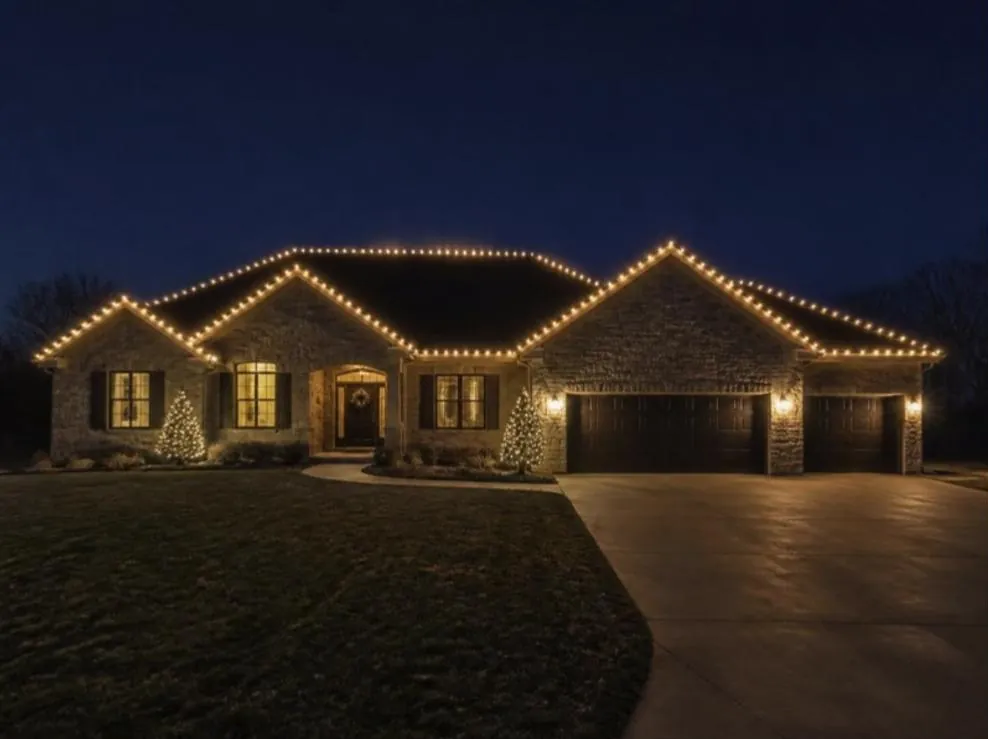
Warm white (around 2700K to 3000K) is the safest choice for most homes, and it looks best on brick, stone, wood and cream or tan siding. Cool white (around 5000K and up) reads crisp on white, gray and modern exteriors, and multicolor works best on simple, cheerful homes and kid-focused displays. Pick one color for the roofline and save any mixing for trees, bushes and accents.
Should you choose warm white or multicolor Christmas lights?
For most homes, warm white is the better roofline choice, because it flatters the most building materials and looks good from the street year after year. Multicolor is the right call when the house is simple, the display is for kids, or you want the fun, nostalgic look. Cool white is a separate choice: sharp and modern, but it can look cold on warm-toned homes.
The rest of this guide covers how each one actually reads on different siding, what the numbers on the box mean, and how to mix colors without the house looking busy.
What do the Kelvin numbers on Christmas lights mean?
Kelvin (K) describes how warm or cool a white light looks: lower numbers look golden, higher numbers look blue. It has nothing to do with brightness. A 3000K bulb and a 6000K bulb can be just as bright and still look completely different.
According to ENERGY STAR, bulbs made to match the color of incandescent light fall around 2200K to 3000K, whiter light is around 3500K to 4100K, and bluer white is 5000K to 6500K. Christmas light makers use similar bands. The Christmas Light Emporium, for example, lists its warm white at about 3000K, pure white at about 4600K and cool white at about 6400K.
| Color | Typical Kelvin | How it looks | Best on |
|---|---|---|---|
| Warm white | About 2700K to 3000K | Golden, soft, like old incandescent bulbs | Red or brown brick, stone, wood, cream, tan and beige siding |
| Pure (neutral) white | About 3500K to 4600K | Clean white, no strong yellow or blue | Gray siding, mixed materials, modern farmhouse |
| Cool white | About 5000K to 6500K | Crisp, icy, slightly blue | White or light gray siding, stucco, very modern homes |
| Multicolor | Red, green, blue, orange and gold mix | Playful and nostalgic | Simple rooflines, ranches, kid-focused displays, cottages |
How do the colors look on different siding?
The siding behind the bulbs changes the whole effect, so start with your exterior, not the box.
Red or brown brick
Warm white wins here almost every time. The golden light picks up the red and brown in the brick and makes the house look warm from the curb. Cool white on red brick tends to look harsh, and the brick can read slightly purple in photos.
Stone
Tan, brown and fieldstone fronts look best in warm white. Gray or slate-colored stone can go either way: warm white keeps it cozy, pure white makes the texture look sharper. If the house mixes stone with light siding, warm or pure white usually ties the two together better than cool white.
White or light siding
This is where you have the most freedom. Warm white looks classic and soft against white siding. Cool white looks clean and bright, almost like frost along the gutters. Multicolor pops more on white siding than on any other surface, because there is nothing behind the bulbs competing for attention.
Dark siding (navy, charcoal, black, deep green)
Dark homes are the easiest to light well. Any color stands out, so the roofline looks crisp from a long way off. Warm white gives a rich, high-end look against navy or black. Multicolor reads bold and cheerful. Cool white can look stark against dark siding, so we usually suggest warm or pure white unless the house is very modern.
When does multicolor make sense?
Multicolor is a great fit when you want the house to feel fun rather than formal. It works best when:
- The roofline is simple, like a ranch or a single front gable, so the colors don't fight the shape of the house
- Kids are the main audience
- The neighborhood leans colorful and you want to match the street
- You want the classic look of the big old bulbs from decades ago
Multicolor can look busy on a house with lots of gables, dormers and rooflines at different heights. Every line competes, and the shape of the house gets lost. On a complex roof, a single color usually looks cleaner.
Can you mix warm white and multicolor?
Yes, and it can look great, as long as you mix by zone rather than by bulb. The rule pros follow: one dominant color on the roofline, then a different color on trees, bushes or accents. A warm white roofline with multicolor trees in the yard is a popular combination, because the house looks finished and the yard looks playful.
A few mixing rules that hold up:
- Keep the roofline one color. Two whites side by side on the same gutter look like a mistake, not a design.
- Don't mix warm white and cool white on the same structure. The difference is obvious in person and even more obvious in photos.
- Repeat your accent color. If one tree is red, put red somewhere else too (a second tree or a wreath bow) so it looks planned.
- Use pattern on purpose. Red and white alternating (candy cane) or red and green alternating can work on a roofline, but only if the pattern is even the whole way around.
Why do some warm white lights look different from others?
Because warm white is a range, not one exact color. One brand's warm white might be 2700K and another's 3000K, and cheaper LEDs can drift slightly pink or green. The lens matters too: faceted and smooth bulbs can look a little different even with the same LED inside.
That is why mixing old strands from the garage with new ones often looks patchy. It is also one reason we only install our commercial-grade lights, never strands from a customer's garage. Every bulb on your house comes from matched stock, so the color is even along the whole roofline and the same next year. If you want to know more about how that works season to season, see how Christmas light leasing works.
How do you choose without guessing?
See it on your house before you commit. A color that looks great on a neighbor's brick ranch might look flat on your gray two-story. Three quick ways to decide:
- Look at your house at dusk. Note whether the siding reads warm (red, tan, cream) or cool (white, gray, blue).
- Drive your street at night. See which colors look good on homes like yours.
- Ask for a mockup in two colors. Seeing warm white and multicolor on a picture of your actual house usually settles it in seconds.
If you are comparing companies, ask each one which color they recommend for your siding and why. A good installer will have an opinion. Our guide on how to choose a Christmas light installer has more questions worth asking, and color choice doesn't change much about what drives the price, which is mostly feet of roofline and height.
Want to see your house in warm white or multicolor?
We design, hang, fix, take down and store everything, so the only decision you make is how it should look. Send your address and we will text back a picture of your home lit up, with a custom quote, in about 15 minutes. Ask for both colors if you can't decide. If you are outside our current area, send your address anyway and we'll tell you straight whether we can reach you.
Common questions
Can I switch from warm white to multicolor next year?
Yes. The lights are supplied each season, so a different color next year is just a design change. Ask for a new mockup when you rebook.
Do warm white LEDs look like old incandescent lights?
Close. Good warm white LEDs sit in the same color range as incandescent bulbs, so most people cannot tell from the street. Cheap LEDs labeled warm white can still look slightly pink or green, which is why matched commercial bulbs matter.
Is pure white the same as cool white?
No. Pure or neutral white sits between the two, around the middle of the Kelvin scale. It looks clean without the blue tint of cool white.
What color do HOAs usually prefer?
It varies by association. Some limit colors and some don't mention them at all. Send us your rules and we will design within them.
Will my warm white match my neighbor's warm white?
Not always. Two brands sold as warm white can be a few hundred Kelvin apart, which is easy to see on houses side by side.